



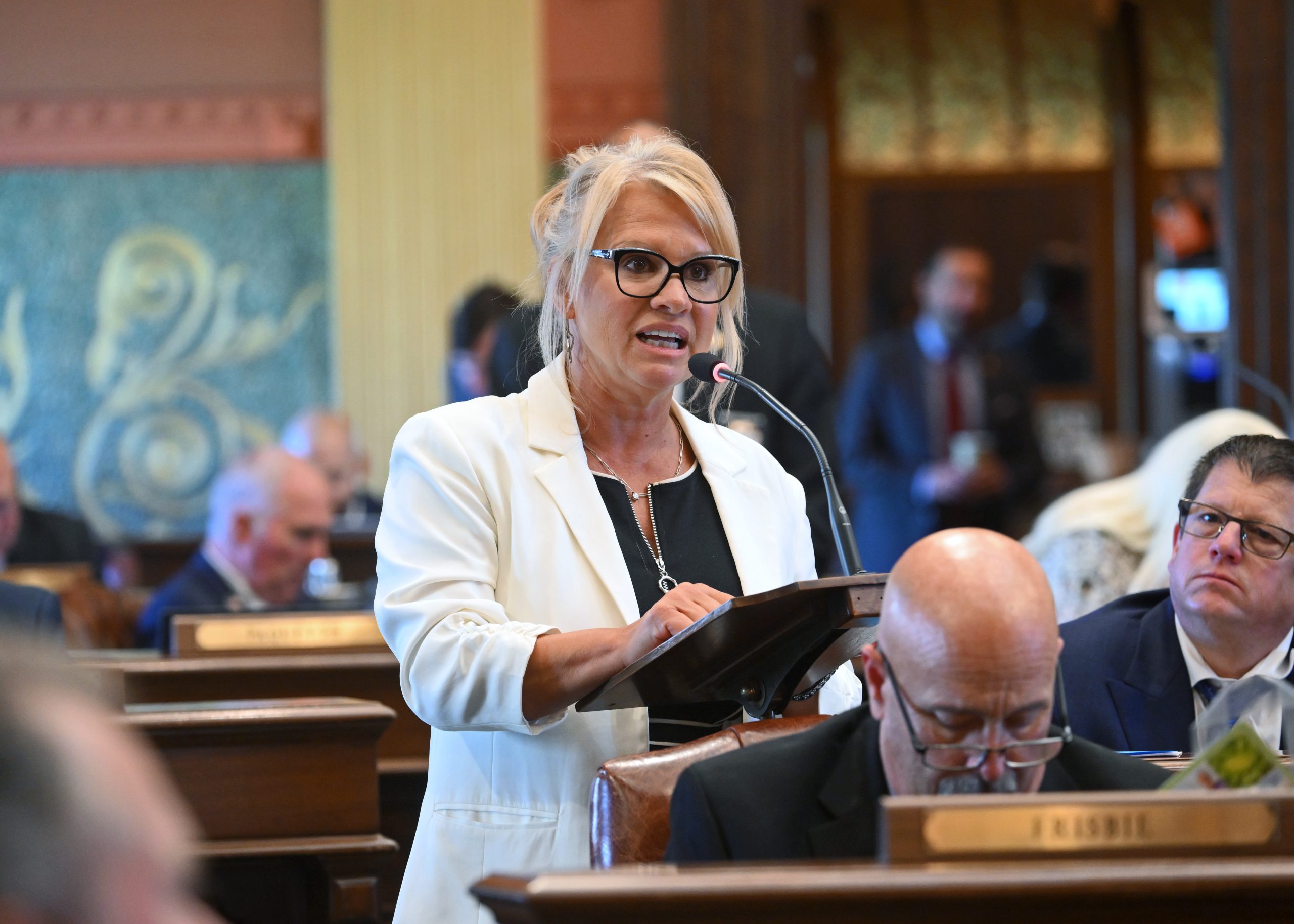
State Rep. Alicia St. Germaine, R-Harrison Township, along with Reps. Ron Robinson, R-Utica, and Mike Mueller, R-Linden today introduced a legislative package establishing clear restrictions and criminal penalties for the improper use of data collected by Flock cameras and similar automated license plate reader technology.
The legislation comes amid concerns from residents about what information the cameras collect, who can access it and how it can be used.
“I’ve heard from people in my district who have legitimate questions about these cameras, who can access the information, what it can be used for, who it can be shared with and how long it is kept,” St. Germaine said. “Those concerns deserve answers, and the public deserves safeguards.”
Under St. Germaine’s legislation, improper use of Flock camera data would include searching for individuals who are not connected to an active alert or legitimate law enforcement purpose, sharing information with unauthorized individuals, and accessing or using the data for commercial or personal purposes, such as background checks, private business ventures or other activities unrelated to an active alert.
The package would also generally prohibit Flock camera data from being retained for longer than 30 days. Exceptions would allow information to be preserved when it is subject to a proper preservation request or warrant, or when it is needed as part of an ongoing investigation.
“Some of the communities I represent have decided to pause the use of Flock cameras while they take a closer look at these concerns,” St. Germaine said. “There is no question that license plate readers can be a useful law enforcement tool, whether it’s helping locate a missing person, identifying a stolen or carjacked vehicle, or assisting with a criminal investigation. At the same time, it is completely fair for residents to have questions and concerns about their privacy and how their information is being used.”
The legislation would establish criminal penalties for violations. A first offense would be punishable as a 93-day misdemeanor, a fine of up to $500, or both. A second or subsequent offense could be punishable by up to four years in prison, a fine of up to $2,000, or both.
St. Germaine said the legislation is designed to preserve legitimate law enforcement uses of the technology while ensuring people who misuse sensitive information can be held accountable.
“Technology changes quickly, often faster than communities can fully understand its capabilities, consider the concerns and make informed decisions about how it should be use,” St. Germaine said. “This legislation is a first step in putting reasonable safeguards in place while communities work through these issues and decide what is right for them”




© 2009 - 2026 Michigan House Republicans. All Rights Reserved.
This site is protected by reCAPTCHA and the Google Privacy Policy and Terms of Service apply.