



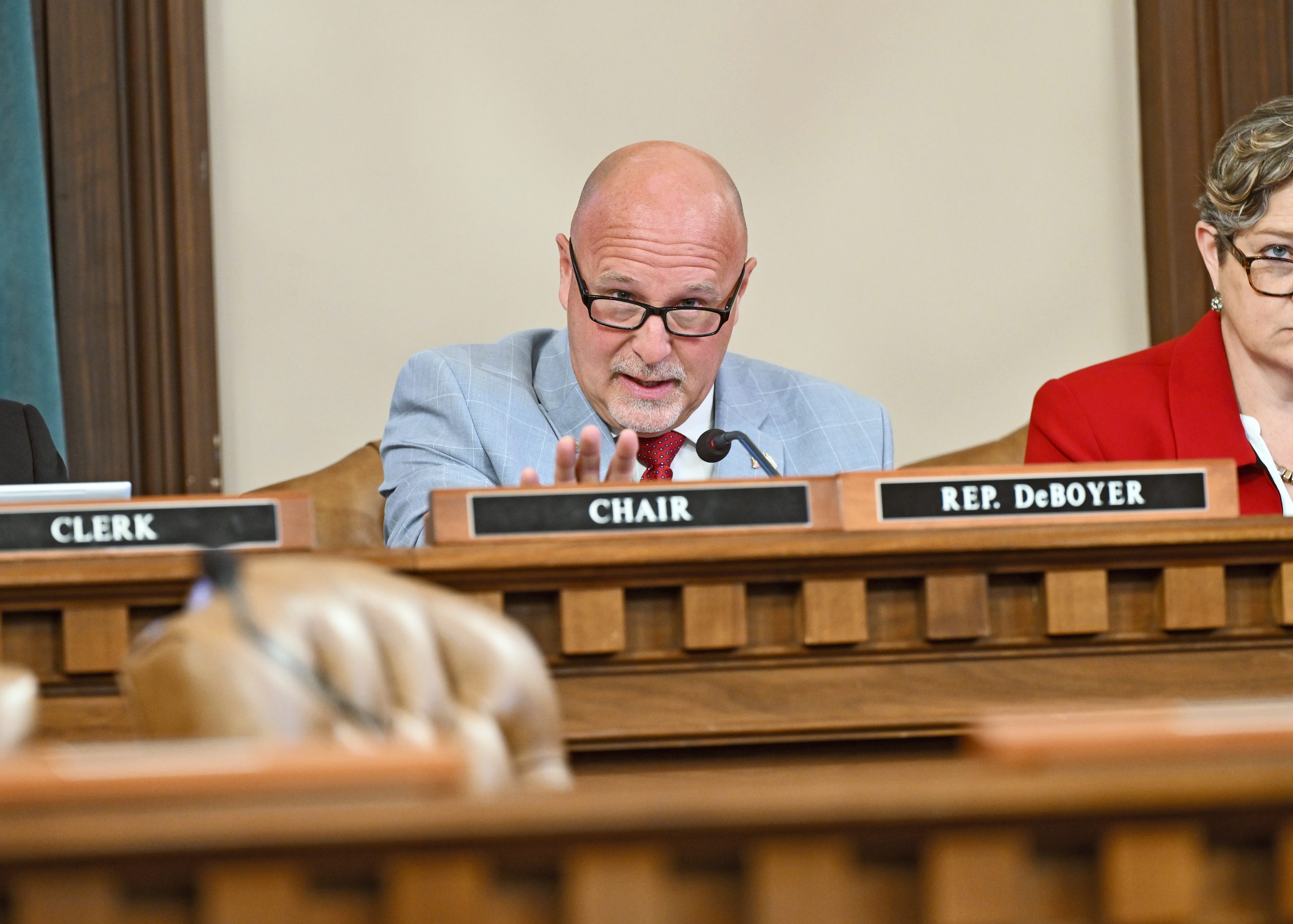
House Oversight Committee Chairman Jay DeBoyer today led a hearing that examined the Rx Kids program amidst concerns about sustainability, how it uses taxpayer dollars, and that it doesn’t serve as a slippery slope toward radical policies like universal basic income.
The committee spoke with Rx Kids Founder and Director Dr. Mona Hanna, who laid out how the place-based, cash-assistance program works for expecting mothers.
“Every legislator wants to support successful families and healthy children in communities across the state,” DeBoyer said. “When we look into these expenditures and how this program operates, we’re coming at it as legislators who have a responsibility to taxpayers. There have been several curious statements and actions from this group on what the future holds. Dr. Hanna has stated it’s a long-term desire to extend this to an unconditional payment plan that supports families that have children up to age 18, which would recklessly add billions of dollars to budget commitments. Dr. Hanna openly stated that privately funded dollars in this program may be accessed by people who are not in the country legally – as publicly funded entities actively go out and promote it.
“There is a long history of social welfare programs that expand and expand and don’t have a lot of downstream results or stray from their original purpose. We must ensure taxpayer-funded programs are effective and sustainable, instead of a pathway to big government bloat.”
Rx Kids was established in 2024 and has received over $300 million in public dollars through existing programs like Healthy Michigan and the federal Temporary Assistance for Needy Families program (TANF).
With things like the Supplemental Nutrition Assistance Program (SNAP), the Michigan Department of Health and Human Services’ diaper program, utility and rent assistance through the Michigan State Housing Development Authority, and more, DeBoyer noted there are over a dozen available programs to help moms and needy families living in Michigan, and that certain elements of Rx Kids are duplicative or pulling funds from resources people can already apply for.
“Many of these existing programs have verification standards for how recipients use funds so taxpayers have assurances that waste and abuse isn’t occurring with available dollars,” DeBoyer said. “What we heard from Dr. Hanna is that this program just trusts recipients in how best to use those dollars. That creates the potential for problems and doesn’t respect taxpayers.”
Hanna said in her comments to the committee that 85 percent of all state dollars the program receives goes to families, with 15 percent – amounting to over $40 million so far – going to staff, marketing, customer service, and other things. Earlier this year, reports exposed the program for using taxpayer dollars to pay an out-of-state organization millions in overhead. The Rx Kids budget last year included roughly $250,000 for promotional items like t-shirts and another $18,000 to incentivize mothers to participate in media events.
“Effectiveness and responsibility when using tax dollars is critical, and that is our responsibility on this panel,” DeBoyer said.



© 2009 - 2026 Michigan House Republicans. All Rights Reserved.
This site is protected by reCAPTCHA and the Google Privacy Policy and Terms of Service apply.